We all want our horses to be happy and healthy, and we’re sure that we would all like to reduce feed costs. This can be achieved in a way that also helps the environment.
Canter for Climate has produced these series of Factsheets giving you some information with hints and suggestions on horse and pasture management that could help you, your horses, and our landscape.
Horses and Pastures - an Introduction
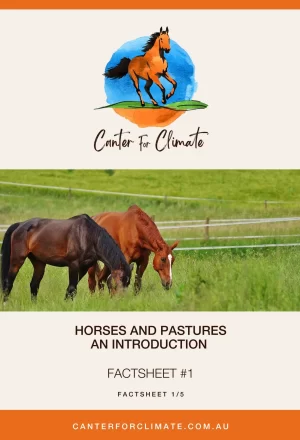
Factsheet #1
Factsheet 1 introduces how the type of pasture a horse eats affects its general health and how grazing affects grasses and soil biology. In addition, it provides some suggestions on how to manage grazing of your paddocks to achieve better (more productive and resilient) pastures. These pastures will provide the healthiest feed for your horses and care for the environment.
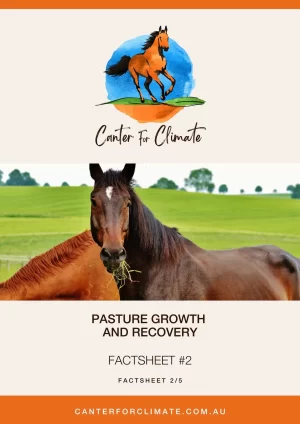
Factsheet 2 explains in more detail pasture grasses growth patterns and how grazing influences the quality and quantity of grass grown.
Actively managing your pastures will improve production, reduce feeding costs and improve the sustainability of your property. To understand how to manage your pastures you need to understand how pastures grow.
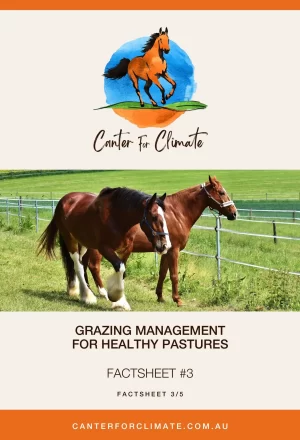
Factsheet 3 describes the principles of pasture management and explains the interaction between pasture plants and soil biology and why taller grasses are good for the environment.
Actively managing your pastures will improve production, reduce feeding costs and improve the sustainability of your property.
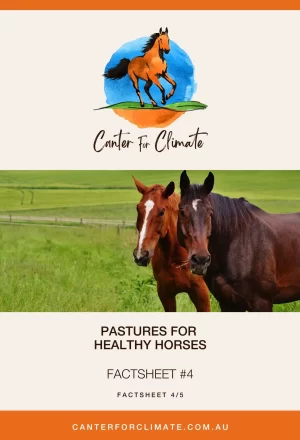
Factsheet 4 provides information on how different pasture conditions affect your horse’s health and offers suggestions on pasture management to achieve the best pasture possible for your horse.
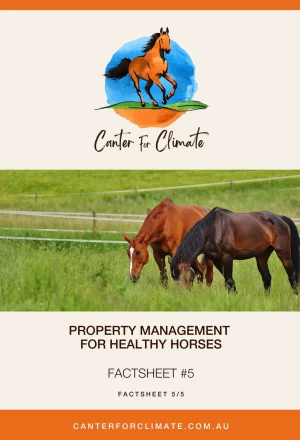
Factsheet 5 discusses principles of care for a healthy horse are discussed. It explains how paddock layout can help keep your horse happy, mentally and physically.
Care of Horses in Extreme Weather Factsheet Series
Canter for Climate aims to assist horse owners to tend for their horses in severe weather events.
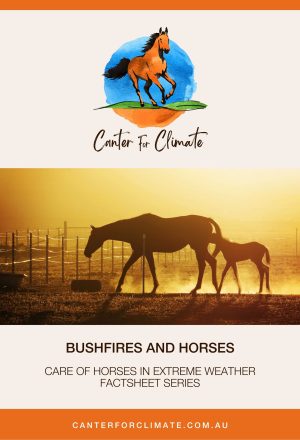
If you own a horse then you will want to know what you need do to keep them safe if a bushfire threatens your area. Whether your horses are located at home or on an agistment property, you need to plan and prepare for their safety.
Care of Horses in Extreme Weather Factsheet Series
Canter for Climate aims to assist horse owners to tend for their horses in severe weather events.
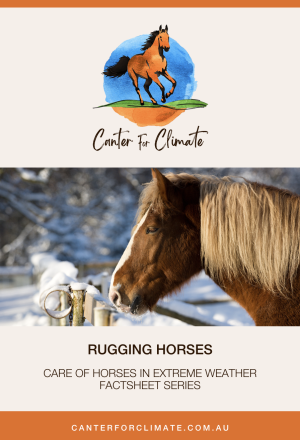
The practice of horse rugging has important implications for horse welfare and performance. We rug our horses to make them more comfortable; warmer in winter, cooler in summer, dry in the rain and to protect them from biting insects. Sometimes we rug to prevent a faded coat or to simply keep a horse clean.
Because knowledge of what horses require is improving every year as we understand more on how they regulate their bodies, we need to ask ourselves “Does my horse need a rug?”
Climate change is making weather extremes occur more often, and our “usual” seasons no longerseem to apply as often with frequent rapid changes in the weather.
So, are our rugging habits still benefiting our horses?
Do we need to review whether our horses need a rug and if they do, then which rugs we should be using?
Thanks for downloading and reading our Factsheet Series. We hope that you found this information valuable, easy to understand and apply to your own horse and land management – every step each of us can make to improve our own environment is one step closer to reducing our collective climate hoofprint.
If you have any questions or comments please don’t hesitate to get in touch with us via email.